
BeeaaB Logo

BeeaaB HealtH nutritional analysis of Chicken Cutlet Milanese

BeeaaB HealtH nutritional analysis of Chicken Cutlet Milanese

The comprehensive nutrient analysis and nutrition table is based on approximately 100 gr of Chicken Cutlet Milanese and takes into account daily calorie and macronutrient needs, including carbohydrates with a breakdown of daily carbohydrate distribution, required fiber, necessary fats categorized into polyunsaturated fats, monounsaturated fats, saturated fats, trans fats, cholesterol, essential omegas such as omega-3 and omega-6, as well as DHA, and proteins with a breakdown of essential and semi-essential amino acids, and all daily requirements for micronutrients such as vitamins and major and minor minerals in the diet of Male 52-year-old individual with a height of 187 centimeters, weight of 82.85 kilograms, and with specified aerobic physical activity in terms of time, intensity, and duration on a daily basis.
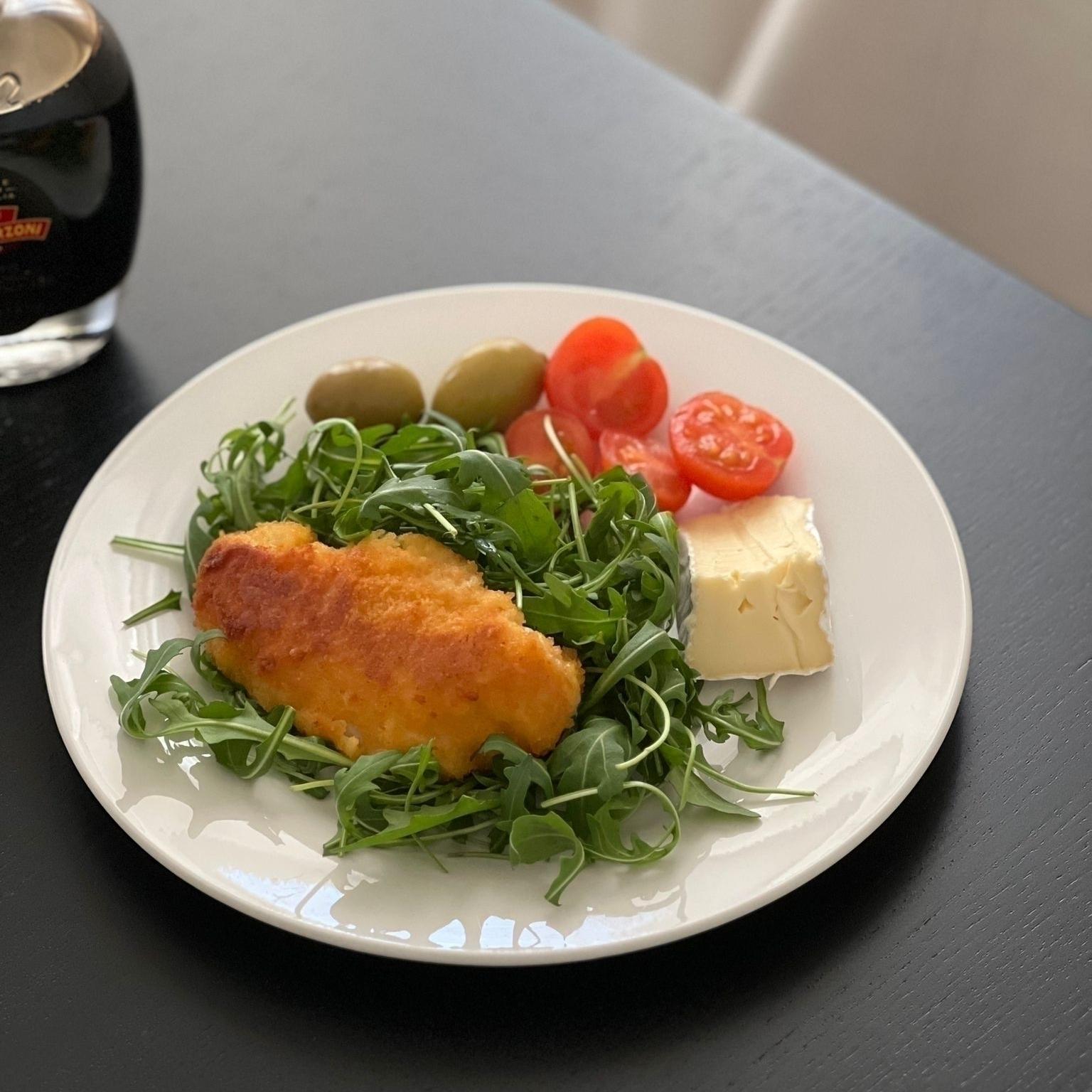

BeeaaB HealtH nutritional analysis of Chicken Cutlet MilaneseBeeaaB HealtH nutritional analysis of Chicken Cutlet Milanese

To precisely understand how much of which food meets your or your child’s daily needs, log in

Calories
9%
Carbohydrate
5%
Protein
13%
Threonine
37%
Isoleucine
50%
Leucine
34%
Lysine
41%
Valine
40%
Tryptophan
46%
Histidine
41%
Tyrosine + Phenylalanine
45%
Methionine + Cysteine
38%
Fat
13%
Essential Fatty Acids (PUFA)
4%
Omega-3
8%
Omega-6
6%
MUFA
20%
SFA
12%
Cholesterol
9%
Fiber
2%
Water
1%
Total Sugar
3%

Vitamins

vitamin c
2%
Thiamine vitamin b1
30%
Riboflavin vitamin b2
41%
Niacin vitamin b3
39%
Pantothenic acid vitamin b5
10%
Pyridoxine vitamin b6
28%
Folate vitamin b9
4%
Cobalamin vitamin b12
15%
Choline
7%
vitamin a
6%
vitamin d
1% >
vitamin k
9%
vitamin e
9%

Minerals

Calcium
5%
Iron
38%
Magnesium
6%
Sodium
26%
Zinc
9%
Selenium
21%
Potassium
6%
Phosphorus
19%
Manganese
2%
Copper
7%

The green color indicates the optimal value that should be provided at least 100% daily.

For the yellow color, receiving less than 100% is recommended.

The less red color is received, the better, with 0% as the ideal.

A red multiplication symbol at the end of the chart indicates that the received amount exceeds the recommended daily intake (UL).

Recipes