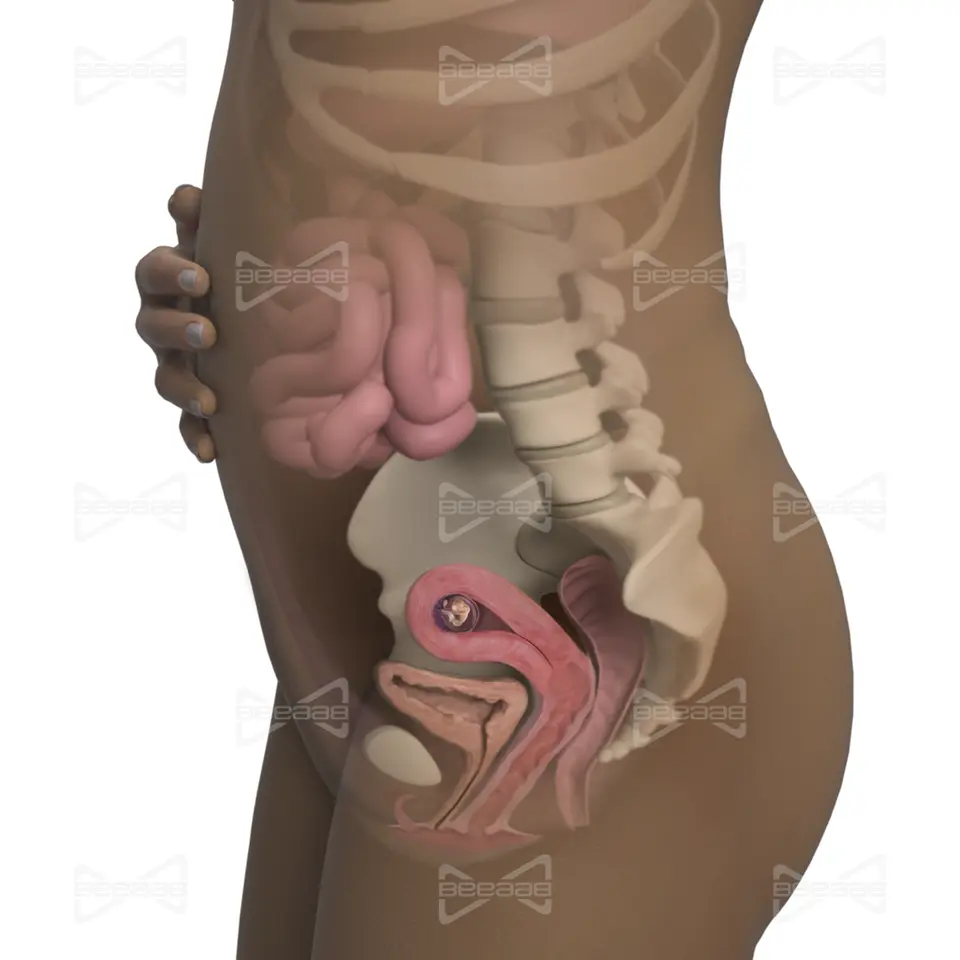


Week 9 of Pregnancy
In the ninth week of pregnancy, you still have to wait eight more weeks to know the gender of your baby. At this stage, reproductive organs, fingerprints, and some key organs like the pancreas and gallbladder are forming. The baby’s size has doubled, and its head, which is nearly half the length of the entire body, is tucked toward the chest. Fingers are growing, and their tips have slightly enlarged. The baby has now developed the four chambers of its tiny heart, and ten small tooth buds are growing in each gum, which will start to harden and connect to the jaw next week. The elbow and knee joints are forming for movement and rotation, although you won’t feel these movements yet. During the first trimester of pregnancy, you should watch for warning signs such as bleeding, back pain, facial swelling, and persistent itching, and if any of these symptoms occur, inform your doctor immediately. If bleeding is lighter than a normal menstrual period and without abdominal pain, it is usually not concerning.
Monitoring and Tests in Week 9
This week, some tests and monitoring will be done to evaluate the health status of both the mother and the baby. These monitoring activities include the following:
The doctor may conduct a visit to check your overall health. This visit includes reviewing your weight, blood pressure, and medical history. The doctor may also ask questions about your nutrition, daily activities, and general well-being.
In certain cases, the doctor may perform an ultrasound to check the baby's growth and heartbeat.
If necessary, a blood test may be done to check pregnancy hormone levels or to screen for urinary infections.
In the ninth week of pregnancy, specific tests for chromosomal abnormalities are not usually recommended unless there are specific conditions that the doctor deems necessary. Screening tests for Down syndrome are typically performed in the second trimester, between weeks 16 and 20. These tests include measuring biochemical markers in the mother’s blood, which help in the possible detection of chromosomal abnormalities like Down syndrome.