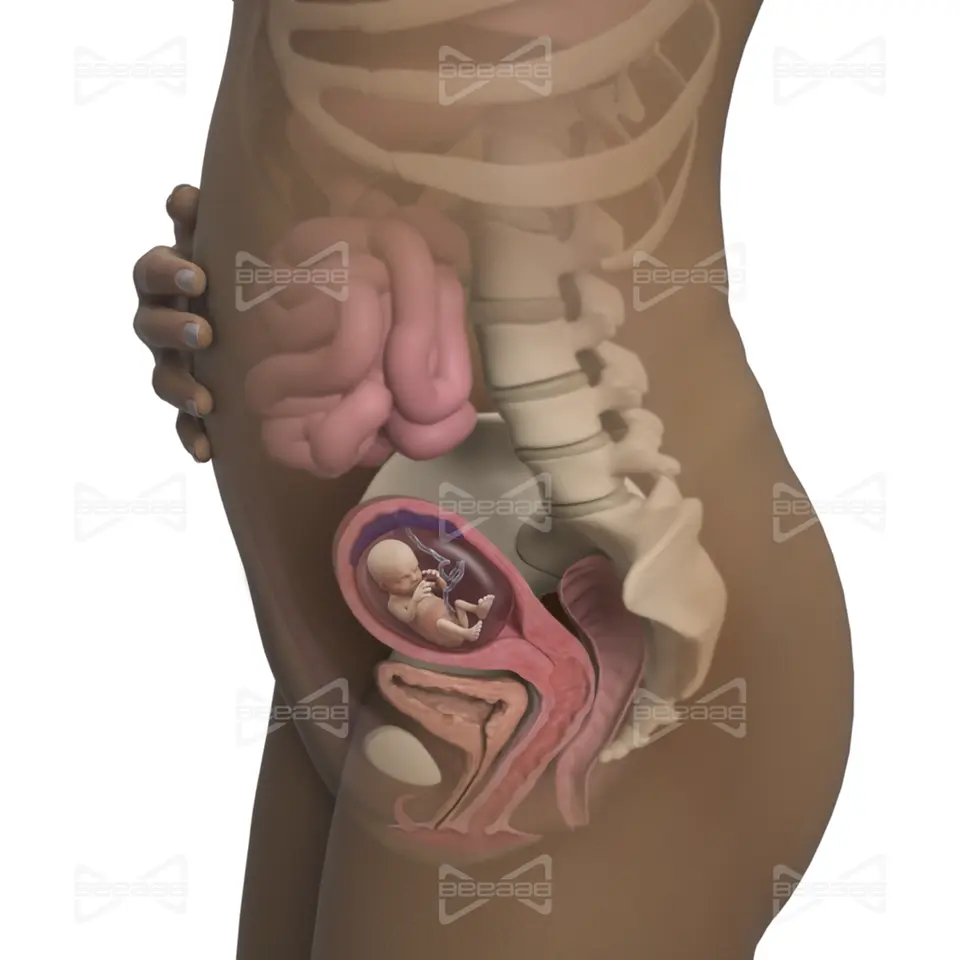


Week 14 of Pregnancy
If you are having a boy, the prostate is forming, and if you are having a girl, the ovaries are moving downward into the pelvis. This week, the fetus's bones are becoming stronger, and it is making more noticeable movements. Please visit your doctor every week during the second trimester. At each visit, they will check your weight, blood pressure, urine, and the fetal heart rate. You can ask your questions about fetal movements, childbirth classes, weight gain, and any unusual symptoms or conditions from BeeaaB HealtH or your doctor. Along with the growth and changes of the fetus, the range of pregnancy tests you will undergo will also widen. In the second trimester, you will have one or two blood tests and an ultrasound to check the anatomy, growth, and physical health of the fetus, and you may also learn the fetus's sex. The sex of the fetus is usually more accurately detectable in ultrasounds between weeks 18 to 20, but in some cases, it might be detectable from week 12. Additionally, with your doctor's advice, amniocentesis might be necessary in the second trimester.
Tests and Monitoring in Week 14
Several routine tests and monitoring that may not have been done in the previous week might be conducted and reviewed this week to assess the health of the mother and fetus. Some of the most important tests and screenings at this time include:
A blood test during the first pregnancy visit to check hemoglobin levels, blood type, Rh factor, and to screen for infections such as HIV, hepatitis B, and syphilis. These tests help assess the overall health of the mother.
A urine test to detect urinary infections, protein, and glucose. This test is usually repeated at each prenatal visit.
Biochemical screening, including triple (Triple Screen) or quad screen (Quad Screen), may be done this week or in the following weeks (between weeks 15 to 20). These screenings check the levels of alpha-fetoprotein (AFP), human chorionic gonadotropin (hCG), unconjugated estriol (uE3), and in the quad screen, inhibin A.
Nuchal translucency ultrasound measures the thickness of the fluid at the back of the fetus’s neck, which can help identify chromosomal abnormalities such as Down syndrome. This ultrasound is done between weeks 11 to 14 of pregnancy. If it hasn’t been done yet, your doctor may request it.
Non-invasive prenatal testing (NIPT) can be done from the tenth week of pregnancy and is typically used to detect chromosomal issues like Down syndrome, trisomy 18, and trisomy 13. This test examines the DNA of the fetus using a sample of the mother’s blood.
During weekly or bi-weekly visits, your doctor will check your weight, blood pressure, and the fetal heart rate and discuss any symptoms or concerns you may have. The doctor may also talk about nutrition, vitamin supplements, and any necessary medications.
These tests and monitoring help doctors evaluate your and the fetus’s health effectively and take appropriate actions if needed. It is always best to discuss detailed testing and visit schedules with your doctor and follow their recommendations.