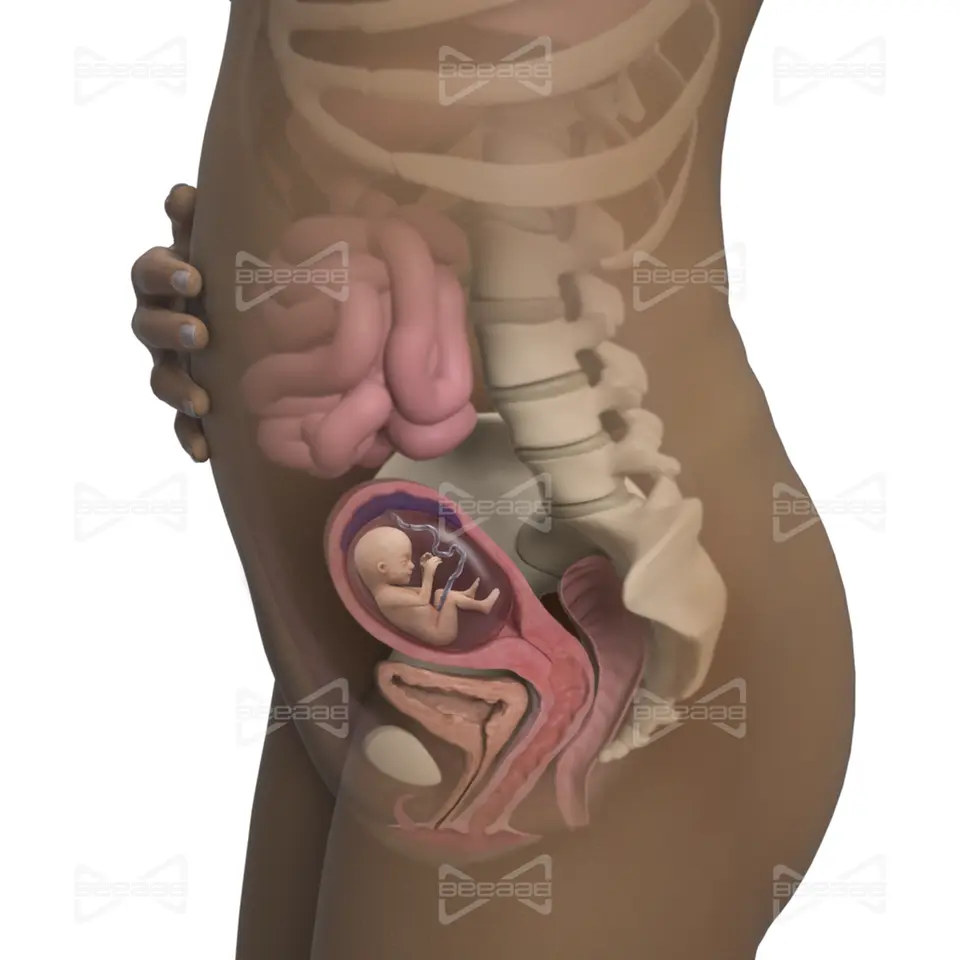


Week 15 of Pregnancy
In this week, the first fine and very soft hairs of the fetus cover its back, shoulders, ears, and forehead, helping it to retain body heat. These hairs may fall out before birth as the fetus gradually accumulates enough fat to keep warm. Facial expressions are the newest movements of your fetus; it can frown, squint, and even move its eyes. Don’t worry, these movements indicate normal growth and do not reflect its mood. Between weeks 15 and 18, a blood test for alpha-fetoprotein (AFP) levels is performed. This test is used to identify certain abnormal fetal conditions such as spina bifida. At this time, the fetus not only moves but also sleeps and wakes up regularly and periodically. It is also developing the ability to chew and hear. A skilled sonographer might be able to determine the fetus’s sex. With the help of BeeaaB HealtH’s dietary program, you can help alleviate nausea and extreme fatigue. Additionally, screening for the likelihood of Down syndrome is done for the second time during this period, known as the quadruple screen.
Tests and Monitoring in the Fifteenth Week
Several routine tests and screenings, if not done in the past week, may be conducted and reviewed this week. Various tests and screening are carried out to assess the health of the mother and fetus. The most important biochemical and screening tests at this time include:
Biochemical screening, which includes the triple screen or quadruple screen, may be performed this week or in the following weeks (between weeks 15 and 20). These screenings involve measuring alpha-fetoprotein (AFP), a protein produced by the fetus, where abnormal levels may indicate neural tube defects or other issues. Human chorionic gonadotropin (hCG), where high levels of hCG may suggest Down syndrome. Unconjugated estriol (uE3), a hormone produced by the placenta, where low levels may indicate chromosomal problems, and in the quadruple screen, inhibin A, which adds to the accuracy of Down syndrome detection.
Amniocentesis (if necessary) is usually performed between weeks 15 and 20 of pregnancy and is used to diagnose chromosomal abnormalities such as Down syndrome, neural tube defects, and other genetic conditions. This test is usually recommended for mothers over 35 years old or if previous screening results have been concerning.
Routine blood and urine tests are performed to assess the mother’s overall health and detect any infections or other issues. This includes tests such as hemoglobin and glucose levels.
A sonogram may be performed to check the growth and development of the fetus and to confirm the due date. This sonogram can also help in identifying structural defects.
Non-invasive prenatal testing (NIPT) is typically performed in the first trimester but may also be done in week 15 and is usually used to detect chromosomal issues. This test involves analyzing the fetus’s DNA from a sample of the mother’s blood.
These tests and monitoring help doctors better assess the health of the mother and fetus and take appropriate measures if necessary.