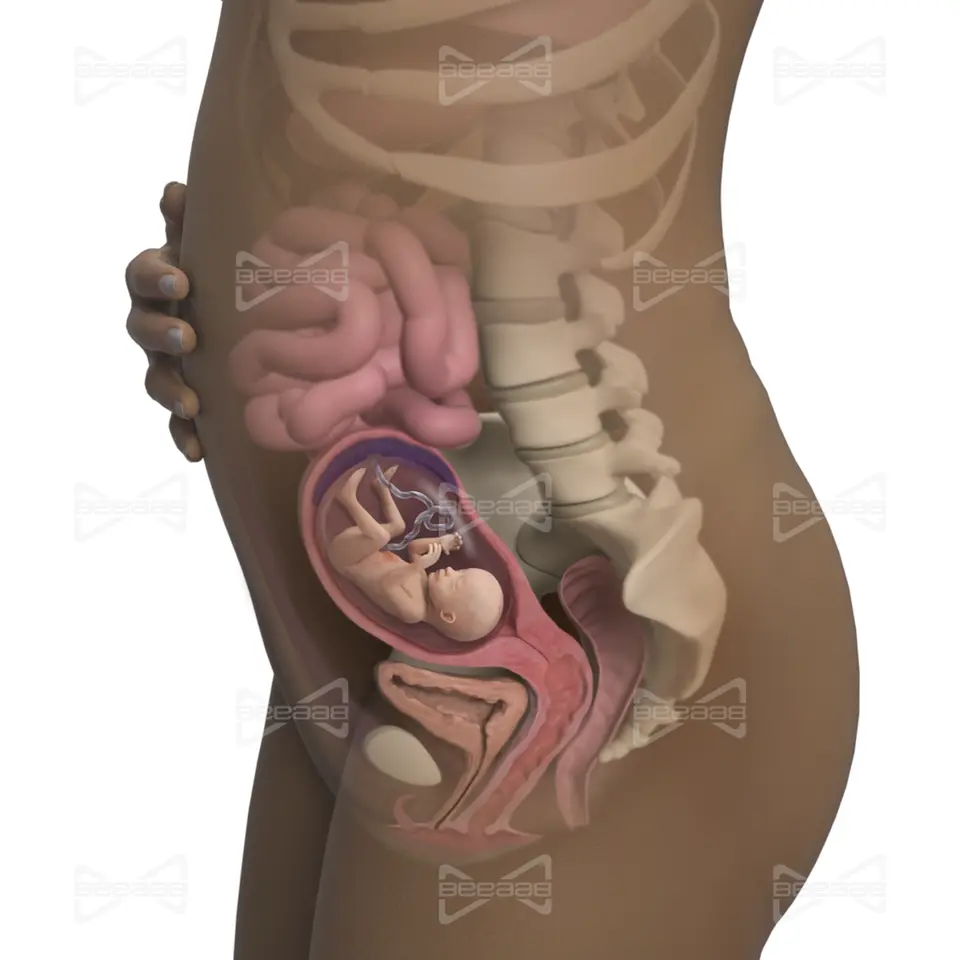


Week 18 of Pregnancy
Are you and your partner talking to your baby? It’s good to know that the baby’s ears are now sufficiently developed and can hear various sounds, including blood flow through the umbilical cord, stomach rumblings, and your heartbeat. In fact, sudden or loud noises may startle the baby. Sing to your baby now, tell stories, or enjoy BeeaaB HealtH’s fetal music. Your voice is more comforting than any music, and the baby can distinguish your voice from other sounds. The baby’s skeleton, which was initially mostly cartilage, is now turning into bone. Gradually, your uterus will be level with your navel, and the uterus grows about one centimeter each week. You might notice your nails growing stronger and even faster than before. Additionally, hair might start growing in areas that previously had no hair, such as your abdomen and face. Pay attention to the baby’s movements, known as quickening, and remember that first-time mothers might not notice these movements right away, so don’t be too concerned.
Tests and Monitoring in Week Eighteen
In the eighteenth week of pregnancy, several routine tests and screenings, if not done in the previous weeks, are usually carried out to assess the health of the mother and fetus. The most important biochemical and screening tests at this time include:
A detailed anomaly scan, usually performed between weeks 18 and 20, is used to examine the baby’s structural development in greater detail. This scan assesses the growth and development of the baby’s organs and limbs and can identify potential structural defects.
Biochemical screening, if not previously done, including the triple screen or quad screen, may be performed this week or in the upcoming weeks (between weeks 15 and 20). This screening includes measuring alpha-fetoprotein (AFP), a protein produced by the fetus, where abnormal levels may indicate neural tube defects or other issues. Human chorionic gonadotropin (hCG), where high levels may suggest Down syndrome. Unconjugated estriol (uE3), a hormone produced by the placenta, where low levels may indicate chromosomal problems, and in the quad screen, Inhibin A, which can increase the accuracy of Down syndrome detection.
Amniocentesis (if necessary) is usually performed between weeks 15 and 20 of pregnancy and is used to diagnose chromosomal abnormalities such as Down syndrome, neural tube defects, and other genetic conditions. This test is generally recommended for mothers over 35 years old or if previous screening results were concerning.
Routine blood and urine tests are performed to assess the overall health of the mother and to detect any infections or other issues. This includes tests for hemoglobin and glucose levels.
Non-invasive prenatal testing (NIPT) is usually done in the first trimester, but it may also be performed in week 18 and is commonly used to detect chromosomal problems. This test examines fetal DNA from a sample of the mother’s blood.
Fetal heart rate monitoring using a Doppler device is done this week to ensure the baby’s heart health.
These tests and monitoring help doctors better assess the health of the mother and fetus and take appropriate measures if necessary.