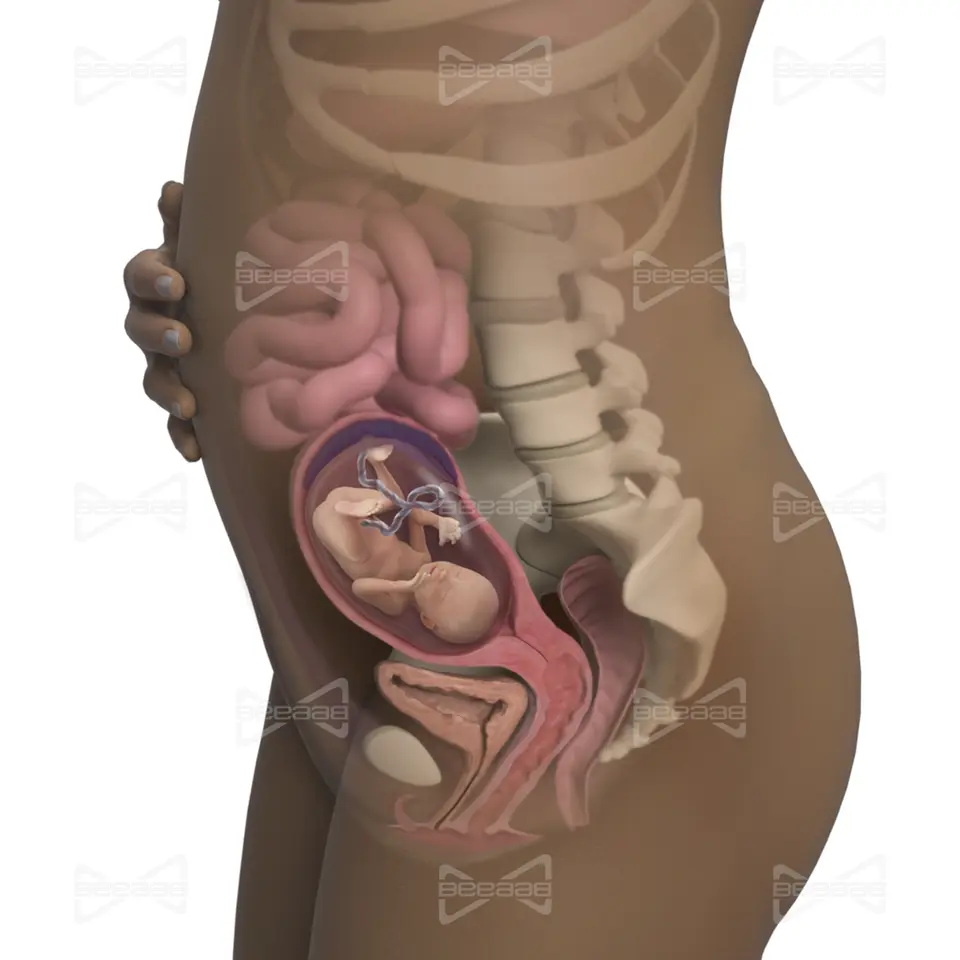


Week 19 of Pregnancy
In the nineteenth week of pregnancy, your baby begins to produce vernix (a white, greasy, cheese-like coating) that helps regulate body temperature and protect the baby’s skin in the amniotic fluid. Most of this vernix will disappear by the time of delivery. The baby’s heartbeat is now almost twice as fast as yours. You might experience heartburn this week. This issue is common for two reasons: first, the high level of the hormone progesterone reduces digestion speed and relaxes the sphincter muscles between the stomach and esophagus. This muscle normally tightens to prevent stomach acid from moving upward. Second, as the uterus grows and presses on the stomach, stomach acid may reflux into the esophagus. Additionally, you might experience abdominal pain or mild, short-term contractions in the middle of the second trimester. These contractions, known as Braxton Hicks contractions, are usually felt more during physical activity and are generally not a serious concern.
Tests and Monitoring in Week Nineteen
In this week of pregnancy, several routine tests and screenings, if not done in the previous weeks, are usually performed to assess the health of the mother and fetus. The most important biochemical and screening tests at this time include:
A blood test to assess levels of pregnancy hormones such as alpha-fetoprotein (AFP), screen, chorionic hormone (hCG), and estriol.
A urine test to check for urinary infections, glucose, and protein.
A morphology ultrasound to examine the baby’s internal structures, such as the heart, brain, and other organs.
Second-trimester screening (Quad Marker Screening) includes measuring AFP, hCG, screen, and estriol. This test helps in the possible detection of chromosomal abnormalities like Down syndrome and also neural tube defects.
A diagnostic ultrasound may be required if initial test results (such as screening) are abnormal to examine more details of the baby’s structure.
These tests and monitoring help doctors better assess the health of the mother and fetus and take appropriate measures if necessary. These assessments and tests assist the physician in tracking the improvement in the health of the mother and fetus and, if needed, suggesting appropriate medical actions to manage the condition. It is always advisable to consult with your doctor and follow the testing and monitoring plan based on your needs and their guidance.