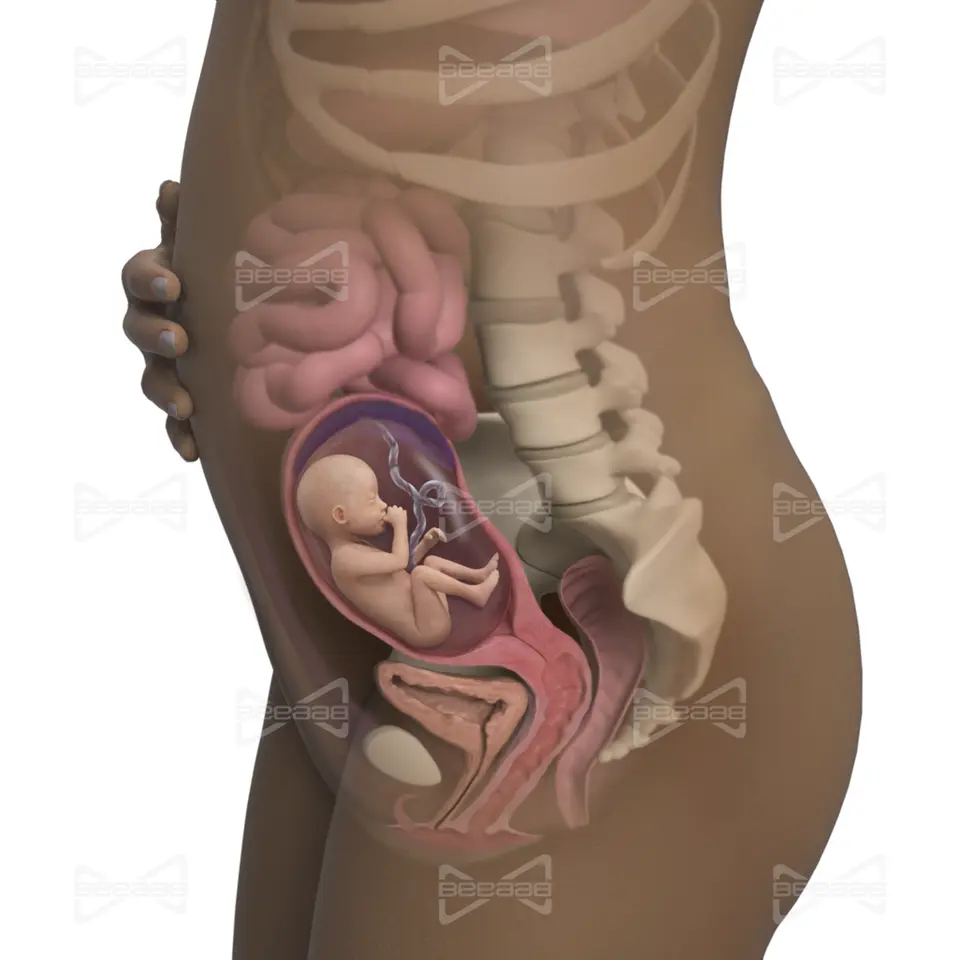


Week 20 of Pregnancy
Congratulations, you’ve reached the halfway point of your pregnancy! The second half of pregnancy usually passes more quickly than the first half. Your baby is now quite comfortable in the womb, continuing to explore with twisting, bending, and kicking movements. The baby’s hair, nails, and eyebrows continue to develop, and the baby increasingly resembles the mother and father. The baby’s weight has reached about 300 grams, and its length from head to buttocks is 16.4 cm, and from head to heel is 25.6 cm. From now on, measurements will be taken from head to heel. The upper part of the uterus, known as the fundus, is now at the top of the abdominal area. Increased blood flow during pregnancy can cause nasal congestion, swollen mucous membranes, runny nose, and even chronic coughs. You might also experience snoring. Exercise during pregnancy has four main components: type, duration, intensity, and rhythm. Sports physiologists at BeeaaB HealtH help you with these components and numerous details to keep your body fit and flexible and to maintain cardiovascular health for you and your baby.
Tests and Monitoring in Week Twenty
In the 20th week of pregnancy, several important tests and screenings are performed to assess the health of the mother and fetus. These tests include:
Anomaly ultrasound (Anomaly Scan), which is one of the most important screenings at this time, is used to check for structural abnormalities in the fetus. This scan measures the brain, heart, kidneys, spine, face, hands, and feet of the fetus, as well as the position of the placenta, amniotic fluid, and fetal growth.
Biochemical screening, if not done in previous weeks, includes triple screening (Triple Screen) or quad screening (Quad Screen), which may be done in this week or in the coming weeks (between weeks 15 and 20). These screenings measure the level of alpha-fetoprotein (AFP), a protein produced by the fetus, and abnormal levels may indicate neural tube defects or other problems. Human chorionic gonadotropin (hCG), with high levels possibly indicating Down syndrome. Unconjugated estriol (uE3), a hormone produced by the placenta, with low levels potentially indicating chromosomal issues, and in the quad screening, Inhibin A, which can improve the accuracy of Down syndrome detection.
Glucose screening test is usually performed between weeks 24 and 28, but some doctors may prescribe it at week 20 as well. This test assesses the risk of gestational diabetes and measures blood glucose levels after consuming a sugary drink.
A urine test is conducted to check for urinary infections and other kidney issues. This test evaluates protein levels, glucose, and the presence of bacteria or infections.
Blood type and Rh test is performed to determine the mother’s blood type and Rh status. If Rh-negative, RhoGAM injection may be administered if needed to prevent isoimmunization.
Maternal blood pressure screening is conducted to identify signs of preeclampsia. This screening checks for high blood pressure, protein in the urine, and other preeclampsia symptoms such as severe headaches or vision changes.
Weight assessment for dietary and nutritional needs and overall health status of the mother.
Finally, these tests and screenings help doctors ensure the health of the mother and fetus and take necessary actions if any issues arise. If you have more questions or need more detailed information, please let me know.