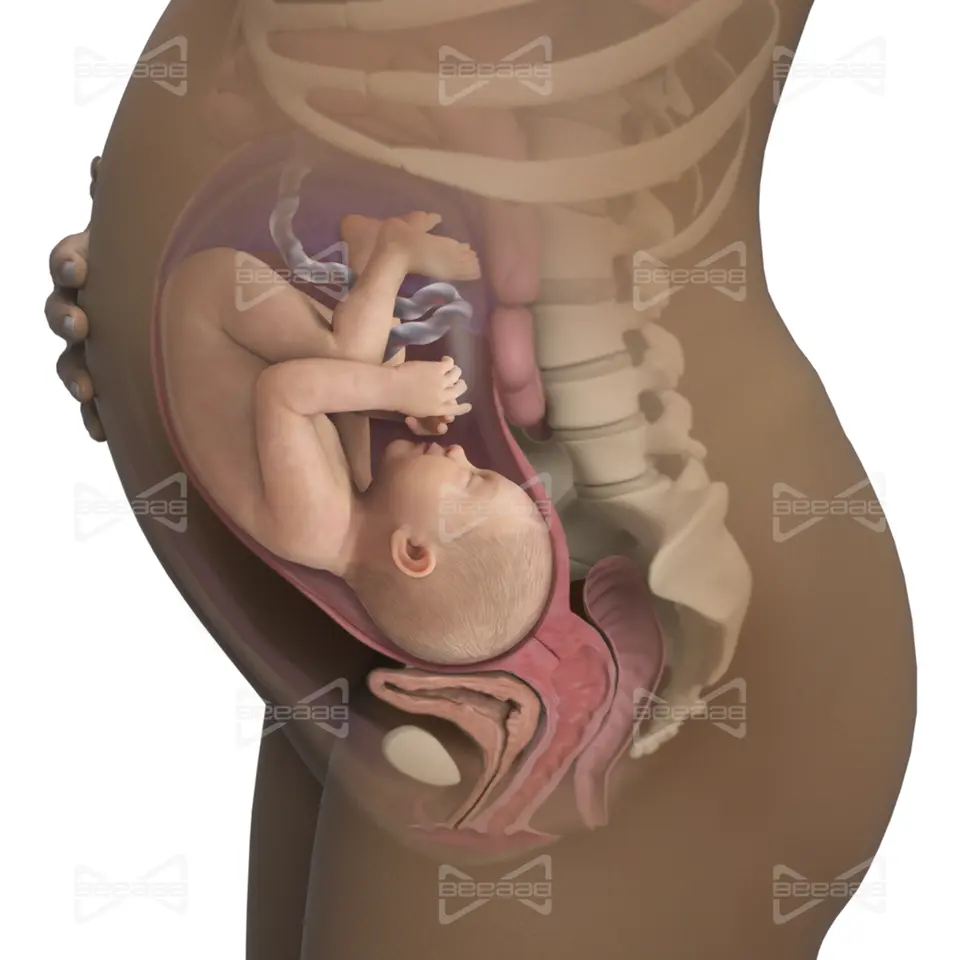


Week 35 of Pregnancy
At this stage, your baby should be positioned with their head facing downward, towards the cervix and vagina. About 97% of babies achieve this position by this time. The remaining babies stay in a position known as breech (when the buttocks or feet are positioned to come out first). If your baby is in this minority, the likelihood of needing a cesarean section increases, but your doctor may be able to manually turn the baby into the correct position by applying pressure on your abdomen. This process, known as an external version, has about a 65% success rate. You may notice rhythmic movements caused by your baby’s hiccups, which are entirely normal and may even continue after the baby is born.
Preeclampsia, also known as toxemia or pregnancy-induced hypertension, occurs due to an increase in blood pressure in the pregnant woman, along with other symptoms and laboratory abnormalities after the 20th week of pregnancy. This condition is not rare and occurs in about 7% of pregnancies. It mostly affects women who are pregnant for the first time in the late second or early third trimester and resolves completely after childbirth.
Tests and Monitoring in Week 35 Numerous tests and monitoring procedures continue to ensure the health of both mother and baby. These care recommendations and nutritional guidelines include:
Complete Blood Count (CBC): This test checks for anemia, hemoglobin levels, and hematocrit. If anemia is detected, iron supplements may be prescribed.
Urinalysis: This checks for protein, glucose, and infections in the urine. Protein in the urine may indicate preeclampsia, requiring special care.
Additional Ultrasounds: If needed and recommended by the doctor, ultrasounds may be performed to check the status of the placenta and amniotic fluid levels.
Special Tests: Depending on the condition of the mother and baby, other tests may be recommended.
Tetanus, Diphtheria, and Pertussis (Tdap) Vaccine: If you haven’t received it yet, it might be recommended at this time.
Regular Blood Pressure Monitoring: Early detection of preeclampsia or gestational hypertension is important. As in previous weeks, your doctor may ask you to pay attention to and count the baby’s movements. A decrease in movements could indicate a problem and needs further examination.
Nutritional Recommendations
Protein: Protein is essential for your baby’s growth and strengthening of maternal tissues. Good sources of protein include lean meat, fish, eggs, dairy, and legumes.
Iron: To prevent anemia, consume iron-rich foods like red meat, poultry, fish, dark leafy greens, and legumes. Consuming vitamin C with iron-rich foods can enhance iron absorption.
Calcium: For maintaining maternal bone health and helping the baby’s bones grow, consume dairy, leafy greens, almonds, and calcium-fortified products.
Folic Acid: To prevent neural tube defects in the baby, consume foods rich in folic acid such as leafy greens, citrus fruits, legumes, and folic acid supplements.
Hydration: Drink plenty of water to avoid dehydration and support your body’s optimal function. A minimum of 8-10 glasses of water a day is recommended.
Fiber: To prevent constipation, which is common during pregnancy, consume fiber-rich foods like fruits, vegetables, legumes, and whole grains.
Limit Salt and Sugar: Excessive salt and sugar can lead to issues like high blood pressure and gestational diabetes, so these should be limited.
Prenatal Supplements: Your doctor may prescribe specific vitamin and mineral supplements for pregnancy, which should be taken regularly.
DHA: This omega-3 fatty acid is important for the baby’s brain development. Good sources of DHA include fatty fish like salmon and fish oil supplements.
Avoid Unhealthy Foods: Limit processed foods, fast food, and sugary drinks.
Magnesium: To prevent muscle cramps, consume foods rich in magnesium, such as leafy greens, nuts, and seeds.
General Tips
Mild physical activities such as walking, swimming, and yoga can help maintain health and reduce stress.
Adequate rest and sleep are crucial for restoring energy and reducing stress.
Keeping a positive mood and reducing stress through relaxation techniques like meditation, yoga, and counseling is beneficial.
At this stage of pregnancy, your doctor may discuss labor signs and when you should go to the hospital.
Following these recommendations and consulting with your doctor can help maintain the health of both mother and baby and lead to a healthy pregnancy.